compliance
Why Compliance Infrastructure Is Your Fintech Competitive Advantage
Most payment platforms treat compliance as overhead. REDFi builds it into the foundation—preventing account freezes, enabling institutional partnerships, and turning regulatory clarity into a growth engine for global businesses.
REDFi

On this page (7 sections)
- Why Payment Platforms Fail: The Hidden Compliance Tax
- What Regulators Actually Want (And Why Most Platforms Miss It)
- The Real Cost of Non-Compliant Infrastructure
- How Compliance Infrastructure Enables Product Innovation
- Why Institutional Customers Demand Compliance-First Platforms
- The Future Belongs to Transparent Payment Systems
- Why REDFi Builds Compliance Into Every Transaction
Why Payment Platforms Fail: The Hidden Compliance Tax
You've built a profitable business. Revenue is growing. Then your payment processor sends an email: "Account under review. Funds frozen pending investigation."
No warning. No clear explanation. Just operational paralysis.
This scenario plays out hundreds of times per year across fintech platforms. The root cause isn't fraud or suspicious activity—it's structural compliance debt. Platforms that bolt on KYC and AML checks as afterthoughts create invisible risk that banking partners eventually refuse to absorb.
When a payment processor loses its banking relationships, every customer account freezes simultaneously. Wire transfers stop mid-flight. Payroll fails. Vendor payments bounce. The platform scrambles to migrate to new banking partners while customers flee to competitors.
REDFi takes the opposite approach: compliance infrastructure as competitive advantage. Every transaction across Wire, SWIFT, ACH, SEPA, PIX, SPEI, and Bre-B rails includes verifiable identity data, source-of-funds documentation, and real-time AML screening before settlement begins.
The result? Zero unexpected account freezes. Predictable transaction approval rates above 98%. Banking relationships that strengthen over time instead of collapsing under regulatory pressure.
What Regulators Actually Want (And Why Most Platforms Miss It)
Financial regulators don't oppose innovation. They oppose opacity.
When a cross-border payment moves $50,000 from a business account in Singapore to a contractor in Argentina, regulators need answers to three questions:
- Who controls both accounts? (KYC verification)
- Where did the funds originate? (Source-of-funds documentation)
- What is the commercial purpose? (Transaction narrative)
Platforms that treat these questions as friction—collecting minimal data, using generic transaction descriptions, skipping beneficial ownership verification—create systemic risk that regulators eventually shut down.
REDFi collects this information before account activation. Every business completes KYB verification including:
- Corporate registration documents
- Beneficial ownership disclosure (individuals owning ≥25%)
- Business model description and expected transaction patterns
- Source-of-funds documentation for initial deposits
When you initiate a Wire transfer to pay an international employee, REDFi automatically includes:
- Verified sender and recipient identities
- Purpose code ("employee compensation")
- Supporting invoice or contract reference
- AML screening results for both parties
Banking partners see complete transaction narratives instead of opaque fund movements. Regulatory audits become routine compliance checks instead of existential threats.
This infrastructure doesn't slow payments down—it accelerates approvals. Transactions with complete documentation clear compliance reviews in minutes instead of days.
The Real Cost of Non-Compliant Infrastructure
Compliance failures don't announce themselves. They accumulate silently until banking partners terminate relationships with 30 days' notice.
Here's what happens when a payment platform loses its primary banking partner:
Day 1-7: Platform announces "scheduled maintenance" while scrambling to onboard backup banking relationships. Customer withdrawals pause. New account signups stop.
Day 8-30: Backup banks conduct emergency due diligence. They discover compliance gaps the original partner tolerated. They demand remediation before accepting the customer portfolio.
Day 31-90: Platform implements compliance upgrades retroactively. Thousands of existing accounts need re-verification. Transaction volumes collapse. Customer acquisition cost spikes as trust erodes.
Day 91+: Competitors absorb the displaced customer base. The platform survives but never recovers its growth trajectory.
This pattern repeats across fintech every quarter. Platforms with millions in venture funding vanish because they treated compliance as overhead instead of infrastructure.
REDFi inverts this model. Our compliance infrastructure includes:
- Continuous KYC monitoring: Automated identity verification updates when government databases refresh
- Real-time AML screening: Every transaction checks OFAC, UN, and EU sanctions lists before settlement
- Transaction pattern analysis: Machine learning flags unusual activity for human review before regulatory escalation
- Audit-ready reporting: Complete transaction histories with supporting documentation exportable in seconds
When regulators audit REDFi's operations, they find systems designed for transparency. When banking partners evaluate risk exposure, they see proactive compliance management instead of reactive damage control.
How Compliance Infrastructure Enables Product Innovation
Most fintech platforms view compliance and innovation as opposing forces. REDFi proves they're complementary.
Consider our USDB stablecoin integration. Stablecoins face intense regulatory scrutiny because they blur lines between traditional banking and cryptocurrency. Platforms without robust compliance infrastructure can't offer stablecoin services without risking banking relationships.
REDFi's compliance foundation enables us to offer:
- USDB balances earning 3% REDFi Rewards (never called "yield" or "APY"—legally compliant terminology matters)
- Instant conversion between USDB, USDC, USDT and fiat currencies
- Visa debit cards backed by stablecoin balances for global spending
- Cross-border payments settling in seconds instead of days via stablecoin rails
Each feature required regulatory approval from banking partners. That approval came quickly because our compliance infrastructure demonstrated:
- Clear fund flow tracking: Every stablecoin mint and redemption links to verified fiat deposits
- Segregated custody: Customer stablecoin balances held in separate wallets from operational funds
- Real-time reserve verification: Banking partners can audit stablecoin backing at any moment
Competitors without this infrastructure can't launch similar products. Their banking partners won't accept the risk exposure.
Compliance infrastructure doesn't constrain innovation—it enables products competitors can't copy.
Why Institutional Customers Demand Compliance-First Platforms
Enterprise finance teams evaluate payment platforms differently than individual users. They don't optimize for the lowest fees or the fastest onboarding—they optimize for operational predictability.
When a CFO selects a payment platform for international payroll across 80+ countries, they ask:
- "What happens during a regulatory audit?"
- "Can we export complete transaction records with supporting documentation?"
- "How do you handle sanctions screening for cross-border payments?"
- "What compliance certifications do your banking partners maintain?"
Platforms without satisfactory answers lose enterprise deals regardless of pricing.
REDFi's compliance infrastructure delivers:
- SOC 2 Type II certification: Independent verification of security and compliance controls
- Multi-user accounts with granular RBAC permissions: Finance teams assign roles (view-only, approve-payments, full-admin) matching their internal approval workflows
- Automated compliance reporting: Export transaction histories filtered by country, currency, payment rail, or purpose code for internal audits
- Dedicated compliance support: Enterprise customers get direct access to our compliance team for regulatory questions
These features cost more to build than basic payment processing. They generate competitive advantages competitors can't replicate without years of infrastructure investment.
The Future Belongs to Transparent Payment Systems
The next decade of fintech innovation won't be defined by speed alone. Stablecoins already settle cross-border payments in seconds. AI automates transaction reconciliation. Blockchain provides immutable audit trails.
The remaining competitive advantage is trust.
Regulators will tighten oversight of cross-border payments. Banking partners will demand stronger compliance controls. Institutional customers will consolidate onto platforms with proven regulatory track records.
Platforms treating compliance as overhead will face:
- Higher operational costs from manual compliance reviews and remediation
- Banking relationship instability as partners reassess risk exposure
- Customer churn when account freezes and transaction delays erode trust
- Regulatory penalties that compound over time
Platforms with compliance-first infrastructure will capture:
- Institutional customers seeking operational predictability
- Banking partnerships that strengthen through transparent risk management
- Regulatory approvals for innovative products competitors can't launch
- Sustainable growth without existential compliance crises
REDFi chose the second path. Every payment rail—Wire, SWIFT, ACH, SEPA, PIX, SPEI, Bre-B—includes embedded compliance infrastructure. Every stablecoin transaction includes verifiable identity data. Every business account maintains audit-ready documentation.
The result isn't just regulatory compliance. It's a competitive moat built on transparency.
Why REDFi Builds Compliance Into Every Transaction
Most payment platforms treat compliance as friction between customers and banking partners. REDFi treats it as infrastructure that enables everything else.
When you open a REDFi business account, you complete KYB verification once. That verification unlocks:
- USD virtual accounts with local payment rails in 80+ countries
- Stablecoin balances (USDB, USDC, USDT) earning up to 3% REDFi Rewards
- Visa debit cards for global spending backed by your stablecoin balances
- Cross-border payments with predictable approval times and transparent fee structures
Every subsequent transaction leverages the compliance infrastructure you established during onboarding. No surprise verification requests. No frozen accounts. No unexplained transaction delays.
Banking partners trust REDFi because they see complete transaction narratives. Regulators approve our operations because they find proactive compliance management. Enterprise customers choose REDFi because they need operational predictability.
Compliance-first infrastructure isn't a cost center. It's the foundation for sustainable growth in global payments.
Ready to see how compliance infrastructure accelerates your business instead of slowing it down? Open a REDFi account and experience payment infrastructure built for transparency.
Frequently asked questions
What happens if a payment platform loses its banking relationships?
When a payment platform loses banking partners, all customer accounts freeze simultaneously. Wire transfers stop, payroll fails, and the platform must migrate to new banking partners while customers experience service disruptions. Platforms with weak compliance infrastructure face this risk regularly, while compliance-first platforms maintain stable banking relationships through transparent risk management.
How does REDFi's compliance infrastructure prevent account freezes?
REDFi collects complete KYC, KYB, and source-of-funds documentation before account activation. Every transaction includes verified identity data, purpose codes, and real-time AML screening. Banking partners see complete transaction narratives instead of opaque fund movements, eliminating the compliance gaps that trigger unexpected account reviews and freezes.
Why do institutional customers prioritize compliance over payment speed?
Enterprise finance teams optimize for operational predictability, not just transaction speed. They need platforms that provide audit-ready documentation, pass regulatory reviews, and maintain stable banking relationships. A platform that processes payments 10% faster but risks sudden account freezes creates more operational risk than value for institutional customers.
What compliance certifications does REDFi maintain?
REDFi maintains SOC 2 Type II certification, demonstrating independent verification of our security and compliance controls. Our platform includes continuous KYC monitoring, real-time AML screening against OFAC/UN/EU sanctions lists, transaction pattern analysis, and audit-ready reporting that banking partners and regulators can verify at any time.
How does compliance infrastructure enable REDFi's stablecoin products?
Stablecoins face intense regulatory scrutiny. REDFi's compliance foundation—including clear fund flow tracking, segregated custody, and real-time reserve verification—enabled us to secure banking partner approval for USDB balances earning 3% REDFi Rewards, instant fiat conversion, and Visa debit cards backed by stablecoin balances. Competitors without this infrastructure can't launch similar products without risking banking relationships.
Keep reading
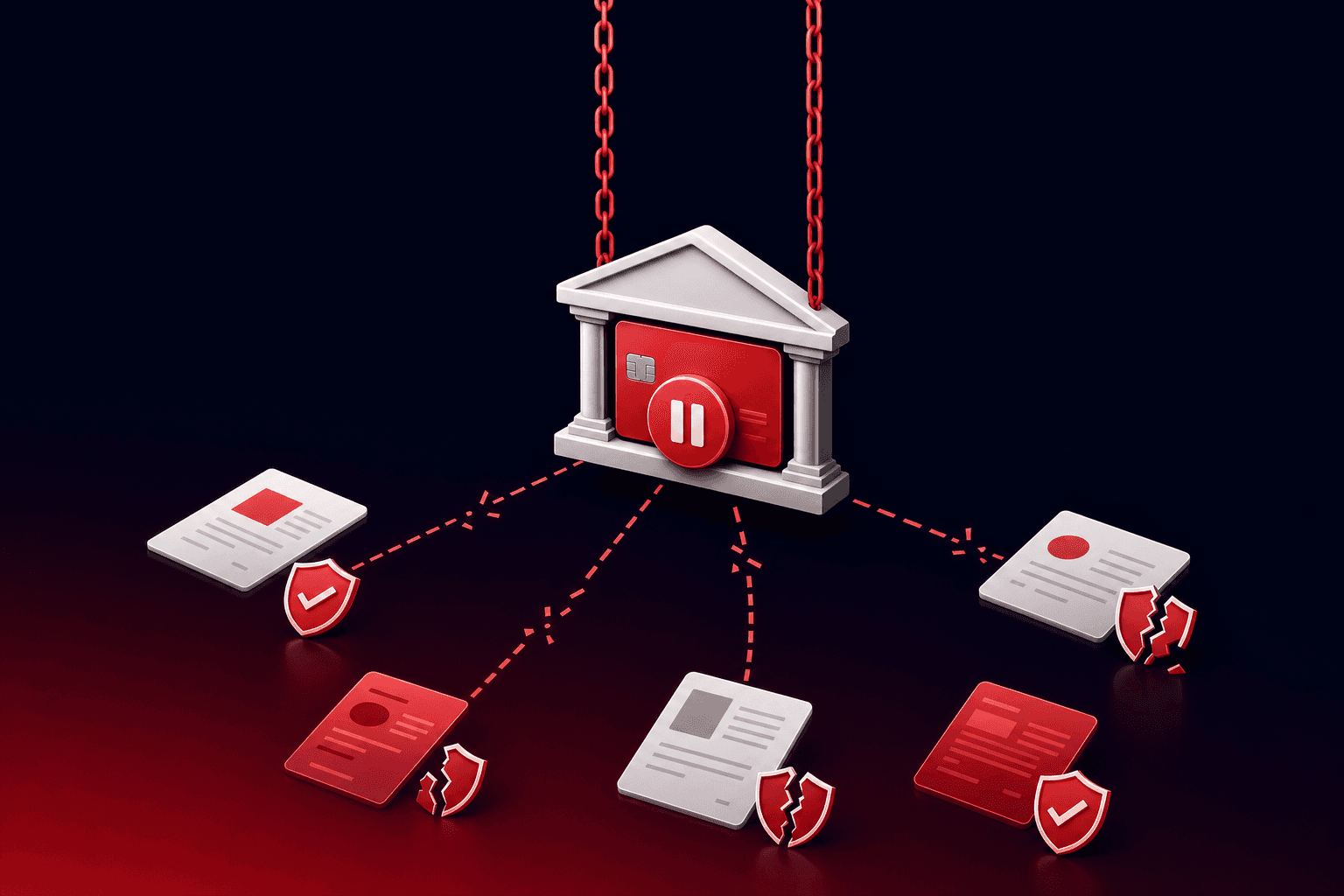
Why Banks Close Crypto Company Accounts (And How to Keep Yours)
Most crypto firms lose banking access not from fraud, but from appearing operationally unpredictable. Banks close accounts when they can't explain your activity to regulators — even if everything you're doing is legal.
13 min read
Why Payment Rails No Longer Matter (And What Does Instead)
Speed stopped being the bottleneck. Modern cross-border payments succeed or fail on compliance infrastructure, downstream integrations, and whether your finance team can actually use the system.
8 min read
What Banks Actually Want From Crypto Companies (And Why Most Fail)
Banks don't reject crypto companies because they're anti-innovation — they reject them because most can't prove they're safe to bank. Here's what compliance-aligned crypto operations actually look like.
12 min read